
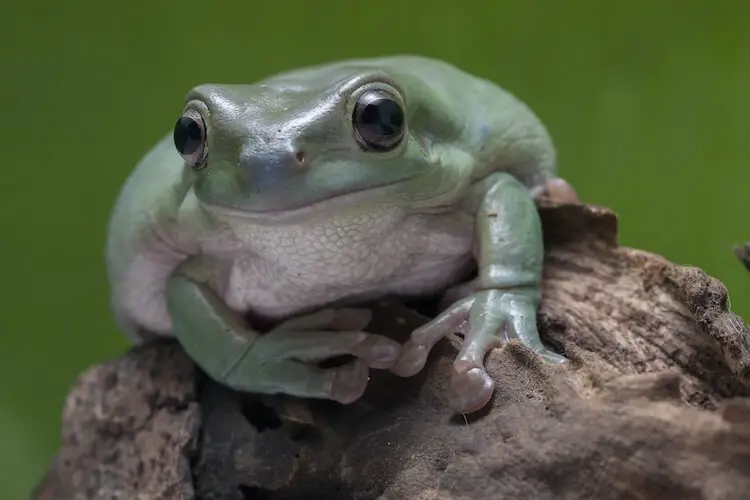
White's Tree Frog
Pelodryas caerulea
A hardy, plump arboreal frog from Australia and New Guinea, popular for its calm temperament and moderate care needs when humidity, ventilation, and feeding are managed carefully.
Overview
White's tree frog (Pelodryas caerulea, long known in the pet trade as Litoria caerulea or Ranoidea caerulea) is a large, plump arboreal frog native to Australia and New Guinea. It is hardy and often calm, but still needs clean dechlorinated water, moderate humidity with good airflow, a tall climbing setup, disciplined feeding to prevent obesity, and limited handling to protect its permeable skin.
Native Regions
Australia, Papua New Guinea, Indonesia (New Guinea)
Habitats
Moist forests and woodlands, Seasonally dry or wet habitats with arboreal retreats, Suburban and agricultural areas near moisture
Adult Length
3-4.5 inches (7-11.5 cm); females usually larger than males
Adult Weight
About 50-90 grams for many adults; healthy adult males in one captive study averaged about 35 grams
Lifespan
10–16 years
For Beginners
A strong introductory amphibian for keepers ready to maintain live insects, supplements, misting with ventilation, and amphibian-safe water. It is more handling-tolerant than many frogs, but still should not be treated like a high-contact pet.
For Experienced Keepers
Experienced keepers can refine bioactive or planted setups, low-level UVB with shade, group housing of similar-sized frogs, quarantine practice, and seasonal breeding projects that can produce very large numbers of tadpoles.
Key Points
- › A popular beginner-friendly arboreal frog when humidity, ventilation, and feeding are managed carefully
- › Needs a tall enclosure with climbing structure, a mild warm gradient, and moderate humidity
- › Can live a decade or more and is prone to obesity if overfed
Appearance & Behavior
Adults are robust tree frogs about 3-4.5 inches (7-11.5 cm) long, with females usually larger than males. Color ranges from light blue-green to emerald green or gray-olive, with a milky white underside. Distinctive features include large toe pads, a fatty ridge over each eye, and a horizontal pupil. Males develop a wrinkled grayish vocal sac and seasonal nuptial pads on the thumbs.
Normal Behavior
These frogs are primarily nocturnal and crepuscular. They often rest on elevated perches by day and become more active at night to climb and hunt. They may sit in open view when comfortable and can change shade somewhat with mood, temperature, or background.
Social Behavior
Compatible same-species groups can work when frogs are similar in size, the enclosure is tall and furnished with multiple perches and hides, and feeding is monitored so subordinate animals still eat. House alone if there is bullying, large size disparity, or insufficient space.
Warning Signs
Persistent lethargy, prolonged appetite loss, dry or damaged skin, excessive hiding, abnormal posture or bloating, open-mouth breathing, wheezing, redness of the underside or limbs, cloudy eyes, or sudden weight gain or loss warrant husbandry review and veterinary advice.
Key Points
- › A plump green arboreal frog with large toe pads and eye ridges
- › Mostly nocturnal; often rests in the open during the day
- › Can be kept singly or in carefully monitored same-species groups
Enclosure & Environment
Enclosure Size
Minimum about 18 x 18 x 24 inches (45 x 45 x 60 cm) for one adult; use a larger tall enclosure for pairs or small groups. Vertical space is essential.
Enclosure Type
Tall front-opening glass or similarly nonporous terrarium with a secure lid; escape-proof mesh or screened top for ventilation and lighting.
Substrate
Use moisture-retentive options such as coconut fiber, cypress mulch, or a bioactive soil mix, often topped with sphagnum or leaf litter. Avoid loose gravel or fine particles that can be swallowed. Paper towel is acceptable for quarantine or temporary setups if humidity is maintained.
Heating
Maintain daytime ambient temperatures around 75-80°F with an optional mild elevated warm area of about 82-85°F. Allow nights near 68-72°F. Use thermostatically controlled low-wattage heat and never use hot rocks. Avoid sustained temperatures above about 86°F.
Humidity
Keep average humidity about 50-70%, with brief rises after misting and enough airflow that surfaces can partly dry. Stagnant, constantly soggy conditions increase infection risk. Mist once or twice daily with dechlorinated water.
Lighting
Provide a roughly 12-hour day and night cycle. Low-output UVB is recommended for calcium metabolism even though the species is nocturnal; supply dense shaded retreats, mount UVB above mesh rather than through glass, and replace bulbs on schedule.
Décor & Enrichment
Offer sturdy branches of varying diameters, cork flats or tubes, live or artificial plants, and elevated hides. Include a shallow, easily entered dish of dechlorinated water changed daily.
Cleaning & Maintenance
Spot-clean feces and uneaten insects daily. Change the water dish daily. Deep-clean periodically with an amphibian-safe disinfectant, rinsing thoroughly before returning the frog.
Key Points
- › Use a tall, secure enclosure with climbing structure and ventilation
- › Pair moderate humidity with airflow and a mild warm gradient
- › Provide clean dechlorinated soaking water and shaded UVB access
Diet & Nutrition
An insectivorous frog that needs varied, gut-loaded live prey rather than a single staple insect.
Food Types
Staples include gut-loaded crickets, roaches, and locusts where legal. Secondary options include small worms, silkworms, hornworms, and black soldier fly larvae. Reserve high-fat waxworms and hard mealworms as occasional treats.
Feeding Schedule
Feed juveniles daily. Feed adults every other day or about three to four times weekly, adjusting to body condition. Remove uneaten insects within a few hours, and sooner if they may stress or injure the frog.
Supplements
Dust juveniles more frequently with calcium and provide a weekly amphibian-safe multivitamin. For adults, dust calcium about two to three times weekly and multivitamin about weekly, adjusting with veterinary guidance if UVB and product formulations differ.
Hydration
Maintain clean, shallow dechlorinated or otherwise conditioned water for soaking, and mist with the same quality water. Do not rely on untreated chlorinated tap water.
Preparation
Offer prey no larger than the distance between the frog's eyes. Gut-load insects for about 24 hours and dust immediately before feeding.
Common Mistakes
Overfeeding leading to obesity, unvaried diets, oversized prey, skipping gut-loading or supplements, and leaving insects in the enclosure overnight.
Key Points
- › Feed a varied rotation of gut-loaded insects
- › Size prey carefully and monitor body condition
- › Obesity from overfeeding is a common husbandry failure
Handling
These frogs are relatively calm and may tolerate brief handling better than many amphibians, but permeable skin still makes routine handling a risk rather than enrichment.
Techniques
Wash hands thoroughly and rinse away soap residue, or wear powder-free gloves moistened with dechlorinated water. Support the body gently and keep sessions short.
Do's & Don'ts
Do not handle with dry, soapy, lotioned, or chemically contaminated hands. Avoid frequent handling, squeezing, or chasing. Keep contact away from the face and open wounds.
Taming
Acclimation comes from predictable care and brief, careful contact when needed, not from repeated handling sessions. Many keepers enjoy this species mainly as an interactive display frog.
Stress Signals
Stop if the frog struggles repeatedly, emits a distress call, becomes unusually pale or dark, refuses to settle, or shows abnormal breathing.
Key Points
- › Occasional careful handling is possible, but less is better
- › Protect permeable skin from soaps, lotions, and dry hands
- › Use moistened powder-free gloves when contact is necessary
Health & Wellness
Common Health Issues
Obesity
Description
White's tree frogs readily overeat in captivity when feeding frequency or prey volume is too high for their activity level.
Symptoms
Excess bulk, reduced climbing, sluggishness, and difficulty maintaining a healthy body outline.
Prevention
Use an age-appropriate feeding schedule, varied prey, climbing opportunities, and regular body-condition checks.
Treatment
Contact a qualified exotic or amphibian veterinarian before making aggressive diet changes; supportive husbandry adjustments should follow veterinary guidance.
Bacterial skin disease and red-leg syndrome
Description
Opportunistic bacterial disease is associated with stressors such as poor hygiene, stagnant humidity, contaminated water, and suboptimal temperatures; reddened skin is a warning sign, not a self-diagnosis.
Symptoms
Redness of limbs or underside, sores, lethargy, appetite loss, or abnormal posture.
Prevention
Maintain clean dechlorinated water, good ventilation between mistings, appropriate temperatures, and quarantine for new animals.
Treatment
Isolate as advised and contact a qualified exotic or amphibian veterinarian promptly for diagnosis and prescribed treatment.
Metabolic bone disease and nutritional imbalance
Description
Inadequate calcium, vitamin D3, UVB access, or prey quality can contribute to skeletal and metabolic problems.
Symptoms
Weakness, poor posture or grip, tremors, fractures, declining appetite, or abnormal limb use.
Prevention
Gut-load feeders, use measured calcium and multivitamin dusting, and provide low-level UVB with shaded retreats.
Treatment
Seek veterinary diagnosis; do not attempt high-dose vitamin, calcium, or UVB correction without professional direction.
Dehydration and humidity-related skin problems
Description
Humidity that is too low can dry the skin, while constant saturation with poor airflow can encourage infection.
Symptoms
Dry or sticky skin, lethargy, clinging to water dishes, abnormal shedding, or skin lesions.
Prevention
Keep average humidity around 50-70%, mist with dechlorinated water, allow partial drying, and always provide a clean soaking dish.
Treatment
Correct husbandry immediately and contact a qualified exotic or amphibian veterinarian if the frog does not improve or shows lesions.
Preventative Care
Monitor appetite, weight or body condition, temperature, humidity, and water cleanliness; quarantine new amphibians; use separate tools; and schedule wellness review with an exotic veterinarian experienced with amphibians.
Emergency Signs — seek vet care immediately
Seek prompt amphibian-experienced veterinary care for open-mouth breathing, severe lethargy, inability to climb or right itself, marked bloating, bleeding, extensive redness or skin damage, eye or mouth discharge, or prolonged refusal to eat.
Key Points
- › Obesity, skin infections, nutritional disease, and humidity errors are common risks
- › Clean water, ventilation, and disciplined feeding prevent many problems
- › Illness signs need veterinary diagnosis, not home medication
Breeding
In the wild, breeding follows summer rains. Captive breeding usually involves a cooler, drier rest period followed by warmer temperatures, increased misting or rain simulation, and access to standing water.
Preparation
Breed only healthy, mature frogs with a plan for hundreds to thousands of tadpoles, quarantine biosecurity, and rearing space. Confirm local legality and veterinary support before inducing breeding.
Breeding Process
Males call and grasp females in amplexus. Females forcibly expel eggs through a sperm cloud into water; a clutch commonly contains about 150-300 eggs, and total seasonal output can be much larger.
Egg Care
Fertilized eggs sink. Keep eggs in clean, stable, dechlorinated water away from adults that may disturb them. Hatching commonly begins within about one to three days.
Hatchling Care
Tadpoles require clean water and appropriate larval diets until metamorphosis, which can occur in about two to three weeks under good conditions. Froglets need tiny live prey and humid, climbing-friendly housing.
Key Points
- › Breeding is rain-season linked and can produce large egg numbers
- › Eggs usually hatch within a few days
- › Do not breed without a complete larval-rearing plan