
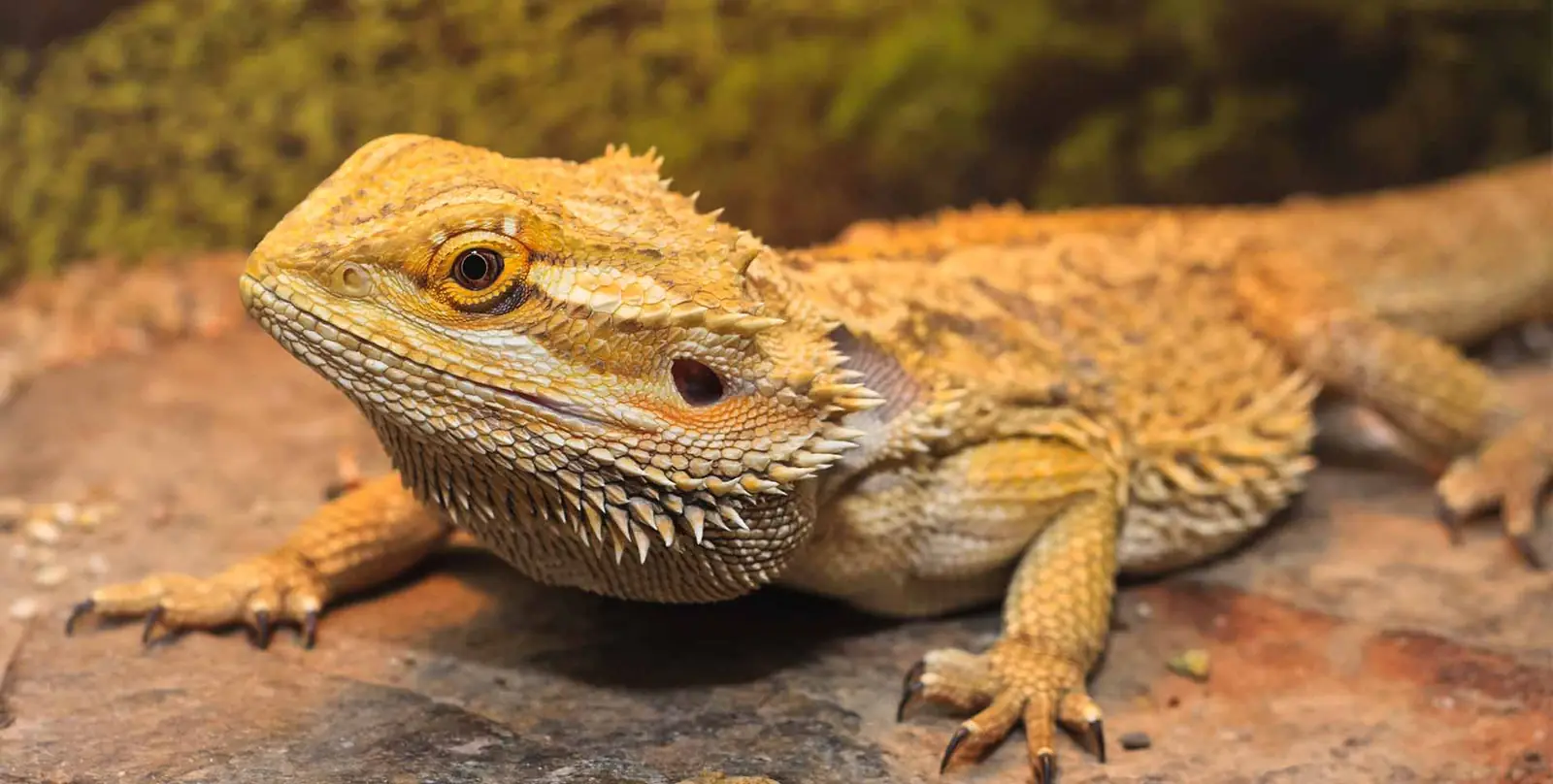
Bearded Dragon
Pogona vitticeps
A diurnal, semi-arboreal agamid from arid and semi-arid central and eastern Australia, widely captive-bred for its moderate size, expandable spiny throat pouch, and generally calm temperament when housed and heated correctly.
Overview
The inland or central bearded dragon (Pogona vitticeps) is a medium-sized agamid lizard native to arid and semi-arid parts of central and eastern Australia, including New South Wales, the Northern Territory, Queensland, South Australia, and Victoria. It is named for the spiny gular pouch that can inflate and darken during display. Almost all pets outside Australia are captive-bred. They are diurnal, terrestrial as adults with climbing and digging habits, and among the most commonly kept pet lizards when a large enclosure, a strong heat and UVB gradient, and an age-appropriate omnivorous diet are provided.
Native Regions
Central and eastern mainland Australia
Habitats
Arid and semi-arid woodland and open scrub, Shrubland and tussock grassland, Desert and dry woodland with basking perches
Adult Length
Usually about 18-22 inches total length; some adults approaching about 24 inches
Adult Weight
Typically at least about 250 grams; many adults about 300-500 grams
Lifespan
10–15 years
For Beginners
A reasonable first lizard for a keeper who can provide live insects, daily greens, a thermostatically controlled 4 x 2 x 2 foot adult enclosure, linear UVB, and a 10-15 year commitment. It is not a low-space or low-equipment pet: a 40-gallon tank is too small for an adult, missing UVB or calcium support commonly causes metabolic bone disease, and cohabitation often causes injury.
For Experienced Keepers
Experienced keepers can refine larger naturalistic or bioactive arid setups, measured UV Index gradients, morph-specific lighting caution for unusually light-sensitive animals, and carefully managed breeding, including nest sites for females that may lay infertile eggs.
Key Points
- › Diurnal Australian agamid with a spiny expandable throat pouch.
- › Needs a large enclosure, a hot basking zone, high-output UVB, and a greens-plus-insect diet.
- › Best housed alone; generally tolerant of short, well-supported handling.
Appearance & Behavior
Adults are usually about 18-22 inches from snout to tail tip, with some approaching about 24 inches, and commonly weigh a few hundred grams once mature. They have a flattened, heavy body, a broad triangular head, horizontal rows of spines along the flanks, and a spiny throat pouch. Wild-type animals are typically tan, brown, or yellowish with darker blotches; captive breeding has produced many color and scale morphs, including smoother leatherbacks. Males tend to be larger-headed, with more prominent femoral pores and hemipenal bulges at the tail base.
Normal Behavior
Active by day. They bask, hunt insects, eat plant material, climb sturdy branches, and may dig. Communication includes slow arm-waving, head-bobbing, and darkening or inflating the beard. A well-fed dragon has a thick tail base and hips that are not sharply protruding; color often brightens after basking. In cooler seasons some animals slow down, sleep more, and eat less during brumation without becoming skeletal.
Social Behavior
Wild males occupy and defend ranges, and captive groups often develop a pecking order that leads to biting, missing toes or tails, chronic stress, or death of smaller animals. Some veterinary summaries allow one male with females in large setups, but welfare guidance recommends housing one dragon per enclosure except for brief, experienced breeding introductions.
Warning Signs
Sunken eyes, a thin tail base, persistent lethargy, tremors, a soft or swollen jaw or limbs, retained shed cutting into toes, chronic constipation or abnormal droppings, mouth lesions, bubbles or discharge from the nose, open-mouth breathing, yellow crusted skin plaques, or prolonged appetite loss require husbandry review and reptile-veterinary care.
Key Points
- › Spiny, flattened diurnal lizard with an expandable beard.
- › Basks, climbs, and communicates with arm waves and head bobs.
- › House singly outside supervised breeding.
Enclosure & Environment
Enclosure Size
Minimum about 48 x 24 x 24 inches (120 x 60 x 60 cm) for one adult, roughly a 120-gallon-class footprint. A 40-gallon tank is not an adult minimum. Juveniles may start smaller but should be upgraded as they grow. Larger is better when heat, UVB, and shade can still be delivered correctly.
Enclosure Type
Well-ventilated wooden, PVC, fiberglass, or glass vivarium that holds heat, has a secure lid or front doors, and is easy to disinfect. Solid-sided vivaria with lizard-level ventilation are often preferred over poorly insulated glass tanks.
Substrate
Paper towel, newspaper, tile, or slate are safest, especially for juveniles, quarantine, and sick animals. Healthy adults may use clean play sand or a sand/soil mix if temperatures and diet are correct and food is not offered on loose substrate. Avoid calcium sand, walnut shell, corncob, bark chips, and aromatic wood. If using solid flooring, still provide a digging box.
Heating
Create a basking surface of about 100-108°F (38-42°C) at one end and a cool end around 75-80°F by day, with overall daytime ambient air spanning roughly 75-85°F across the enclosure. Do not let the dragon's back contact unguarded lamps; keep a safe distance under the basking lamp. Overnight, lights should be off and air should not routinely fall below about 68°F; use guarded lightless heat if the room is colder. Confirm temperatures daily.
Humidity
Keep ambient relative humidity about 30-40% with good ventilation to reduce skin and respiratory problems. Measure at the cool end with a digital hygrometer. A localized slightly damper digging box can aid shedding without making the whole enclosure humid.
Lighting
Provide a roughly 12-hour day and night cycle. Use a high-output 10-12% linear UVB tube over the warm end, covering up to about half the enclosure length, with a photogradient from a basking ultraviolet index of about 3-5 down to zero in shade. Mesh, distance, and lamp age change output, so follow manufacturer guidance and meter when possible. Albino or other unusually light-sensitive morphs may need a lower maximum UVI. UVB does not pass through glass. Turn all lights off at night.
Décor & Enrichment
Provide hides at the warm and cool ends, a large stone or branch basking platform, sturdy climbing branches, visual cover, and a shallow water dish large enough for soaking. A cool-end tub of slightly moist sand/soil supports digging and egg-laying.
Cleaning & Maintenance
Spot-clean feces and soiled substrate promptly, refresh water daily, and deep-clean about monthly with a reptile-safe disinfectant, rinsing well. Wash hands before and after contact because reptiles can carry Salmonella.
Key Points
- › Use at least 48 x 24 x 24 inches for one adult, not a 40-gallon tank.
- › Provide a hot basking zone, cool retreat, and measured high-output UVB.
- › Keep ambient humidity modest and ventilation good.
Diet & Nutrition
Bearded dragons are omnivores. Juveniles eat mostly insects; adults should shift toward a plant-heavy diet with a smaller insect portion. Variety, gut-loading, and calcium support matter more than any single feeder brand.
Food Types
Staple greens include collard, dandelion, mustard, turnip greens, watercress, endive, and escarole. Offer other vegetables such as squash in smaller amounts. Staple insects include gut-loaded crickets, locusts, and feeder roaches. Mealworms in moderation and high-fat larvae only as treats. Limit fruits. Avoid relying on spinach or feeding large amounts of goitrogenic brassicas such as kale and cabbage. Pinky mice are unnecessary for most pets and can contribute to obesity.
Feeding Schedule
Feed hatchlings about twice daily. Juveniles usually eat once or twice daily, with insects making up most of the diet (often around two-thirds insects to one-third plants). Adults larger than about 12 inches should receive greens daily and insects less often, commonly nearer 40% insects and 60% plants. Feed earlier in the day so food can digest while the dragon is warm. Weigh regularly and adjust portions to body condition.
Supplements
Dust most juvenile insect feeds with phosphorus-free calcium. Adults on a strong greens diet with correct UVB usually need calcium less often, such as weekly, plus a multivitamin or combined supplement on a less frequent schedule. With adequate UVB, high dietary D3 is usually unnecessary. Follow product labels and a reptile veterinarian rather than stacking multiple D3 powders.
Hydration
Always offer a large, shallow dish of clean water in the cool end and replace it at least daily. Many dragons take moisture from food more than from a bowl. Lightly wet salads, occasional light misting, and supervised warm soaks can help, especially around sheds. Do not soak as a substitute for correct heat and diet.
Preparation
Wash produce and chop it small enough to eat. Gut-load feeder insects on a nutritious diet for 24-48 hours and hydrate them. Dust insects immediately before feeding. Offer prey no larger than the dragon's mouth, preferably in a dish so substrate is not swallowed. Remove uneaten insects within about 30 minutes so they cannot bite the dragon.
Common Mistakes
Keeping an adult on a cricket-heavy diet, skipping greens, feeding oversized or fatty feeders daily, using only fruit, omitting gut-loading or calcium, feeding on loose sand, and assuming a water bowl is unused so it can be skipped.
Key Points
- › Juveniles are insect-heavy; adults should eat mostly greens.
- › Gut-load and calcium-dust insects; keep fruit and fatty larvae rare.
- › Feed in a way that avoids substrate ingestion.
Handling
Many bearded dragons tolerate short, calm handling once settled, which helps with health checks. Handling is a husbandry skill, not proof the animal enjoys being held.
Techniques
Gently scoop from below with both hands so the chest, abdomen, and all four legs are supported. Keep sessions to about 10-15 minutes so core temperature does not drop. Supervised outdoor time in a secure pen on bright days can provide natural light, with constant shade and escape-proofing.
Do's & Don'ts
Never grab the tail, surprise the lizard from above, or restrain it roughly. Do not handle immediately after feeding if regurgitation is a concern. Keep dogs, cats, and other pets away. Wash hands before and after contact.
Taming
Set up the enclosure and run it for at least a week before arrival. Let the dragon settle with food and water and little handling for the first days to a week. Short, predictable sessions usually succeed; some individuals remain less handleable.
Stress Signals
Backing away, a black inflated beard, open-mouth threat, hissing, glass surfing, or attempts to bite mean stop and try another time. Dark stress coloration that does not recover after basking also warrants a husbandry check.
Key Points
- › Support the whole body; never lift by the tail.
- › Keep handling brief so the dragon does not chill.
- › Respect beard displays and avoidance.
Health & Wellness
Common Health Issues
Metabolic bone disease
Description
Nutritional secondary hyperparathyroidism from insufficient calcium, vitamin D3, or UVB, especially in growing dragons.
Symptoms
Tremors, a soft or swollen jaw, limb swelling, weakness, inability to lift the body, deformities, and fractures.
Prevention
Provide measured high-output UVB, a correct heat gradient, calcium-rich greens, gut-loaded dusted insects, and avoid diets that block calcium uptake.
Treatment
Contact a qualified exotic veterinarian promptly. Do not start injectable calcium, D3, or other medications without veterinary direction.
Gastrointestinal parasites and coccidiosis
Description
Pinworms, protozoa, and Isospora amphiboluri are common. Heavy loads, especially in juveniles, cause illness; some pinworms may be incidental in small numbers.
Symptoms
Loose or foul droppings, diarrhea, weight loss, poor growth, or no obvious signs until a fecal test.
Prevention
Quarantine new animals, keep enclosures clean, avoid mixing dragons, and arrange fecal exams with an exotic veterinarian.
Treatment
Diagnosis and medication must be directed by a qualified exotic veterinarian; over-the-counter dewormers are not a substitute.
Atadenovirus (agamid adenovirus)
Description
A viral infection that can cause acute liver and gut disease in young dragons or chronic poor growth and periodic anorexia.
Symptoms
Sudden weakness, not eating, stunted growth, neurological signs, or unexplained deaths in juveniles.
Prevention
Buy from responsible sources, quarantine, avoid mixing groups, and discuss screening with a reptile veterinarian.
Treatment
There is no simple home cure; supportive veterinary care and isolation are required. Outcome can be poor.
Yellow fungus disease (CANV)
Description
An aggressive fungal skin infection (Nannizziopsis/CANV complex) that can become systemic.
Symptoms
Thick yellow plaques on the face, back, sides, or legs that crack, peel, or bleed, followed by weight loss and weakness.
Prevention
Quarantine, hygiene, and prompt veterinary assessment of unexplained skin crusts.
Treatment
Requires veterinary diagnosis and often prolonged antifungal therapy; this is not a shed or mild scrape to ignore.
Substrate impaction
Description
Digestive blockage from ingested loose substrate or oversized prey, often worsened by low temperatures or dehydration.
Symptoms
Constipation, straining, bloating, reduced appetite, and lethargy.
Prevention
Use safer substrates for juveniles, avoid calcium sand, feed in a dish, and keep the digestive tract warm.
Treatment
Seek reptile-veterinary care; baths alone are not treatment for a serious blockage.
Egg binding and follicular stasis
Description
Females may produce eggs without a male. Without a nest site or with poor condition, eggs or follicles can be retained.
Symptoms
Straining, restlessness, digging without laying, swelling, weakness, or appetite loss in a mature female.
Prevention
Provide a digging box, excellent calcium and UVB support, and avoid breeding underweight females.
Treatment
This is a veterinary emergency if the female cannot lay; do not attempt to manipulate eggs at home.
Preventative Care
Schedule a reptile-veterinary exam and fecal test within days of acquisition and at least annually. Quarantine newcomers, track weight, verify basking and UVB output, replace lamps on schedule, and practice handwashing because reptiles can carry Salmonella. Slow winter appetite can be brumation, but weight loss or complete anorexia still needs a veterinarian.
Emergency Signs — seek vet care immediately
Collapse, continuous tremors or seizures, inability to use limbs, open-mouth breathing with discharge or bubbles, a rapidly worsening yellow skin infection, egg binding with straining and distress, severe diarrhea with weight loss, or a dragon that will not eat and is becoming thin require urgent exotic veterinary care.
Key Points
- › UVB, calcium, and heat mistakes drive metabolic bone disease.
- › Parasites, adenovirus, and fungal skin disease are common veterinary diagnoses.
- › Use exotic veterinary care for diagnosis and treatment.
Breeding
Captive breeding is well established. Females bury clutches of roughly a dozen to two dozen eggs and may produce several clutches in a season. High incubation temperatures can reverse genotypic males into phenotypic females.
Preparation
Breed only healthy adults, typically 1-2 years old and in good body condition. Provide a deep digging or lay box of slightly moist substrate. House sexes separately except for planned introductions. Unmated females can still develop eggs and need a nest site to reduce egg-binding risk.
Breeding Process
In the wild, mating is associated with Australian spring and summer; indoor animals may cycle with light and temperature instead. After mating or even without a male, the female excavates a burrow, lays eggs, and backfills. Remove eggs if breeding is intentional; freeze and dispose of unwanted eggs if they might be fertile.
Egg Care
Incubate at a stable temperature near 84°F (about 29°C) with a moist incubation medium. Hatching often occurs in about 55-75 days. Avoid sustained incubation around 93-99°F (34-37°C), which can override genetic sex determination and reduce welfare. Very frequent laying can deplete calcium; extra veterinary guidance is then needed.
Hatchling Care
Hatchlings are small and grow quickly. Offer tiny gut-loaded insects twice daily, finely chopped greens, correct heat and UVB, and individual housing. They shed often; do not peel stuck skin.
Key Points
- › Clutches are large; even unmated females may need a nest box.
- › Incubate near 84°F and avoid very hot incubation that can reverse sex.
- › Hatchlings need frequent insects and their own enclosure.