
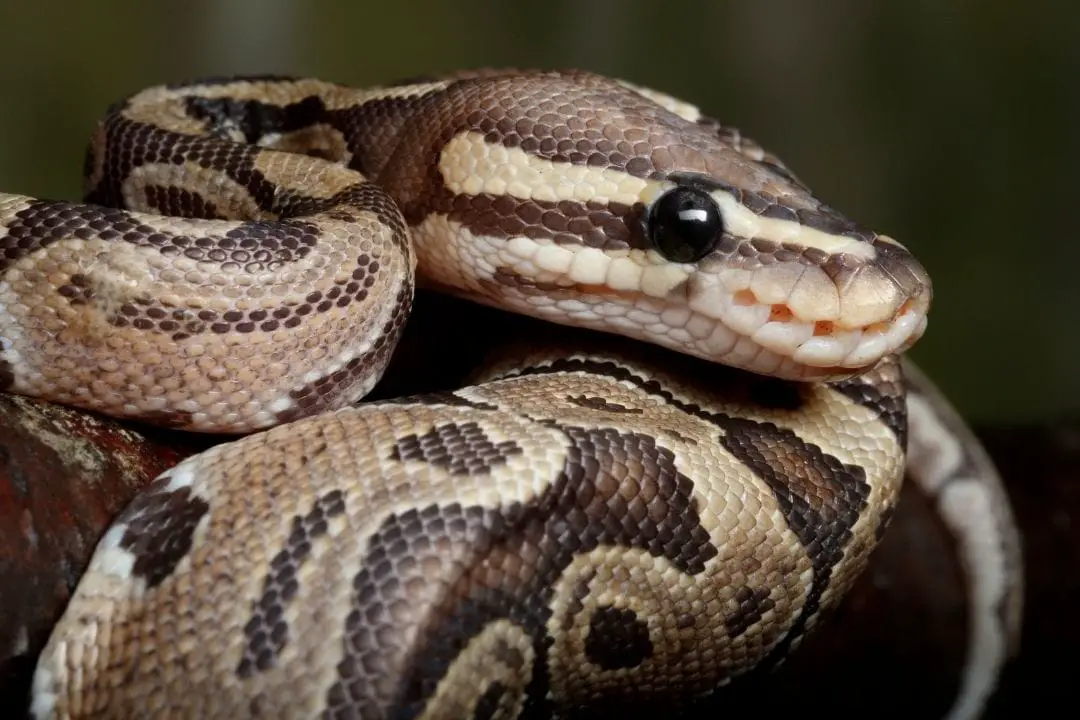
Ball Python
Python regius
A medium-sized, typically docile West and Central African python that hides in burrows by day, coils into a ball when frightened, and is widely captive-bred.
Overview
The ball python, also called the royal python, is a non-venomous African constrictor (Python regius). It occupies savanna, open woodland, farmland, and similar habitats from Senegal across West and Central Africa to South Sudan and Uganda. By day it typically rests in rodent burrows or other tight retreats; it is mainly crepuscular to nocturnal. When frightened it often coils into a tight ball with the head in the center. Captive-bred animals are widely available, but wild collection and ranching still affect some populations, and the species is listed on CITES Appendix II.
Native Regions
West Africa from Senegal to Nigeria, Cameroon and the Central African Republic, Northern Democratic Republic of the Congo, South Sudan, and Uganda
Habitats
Savanna grassland, Open woodland and forest edge, Agricultural land and farmland mosaics, Rodent burrows and similar underground retreats
Adult Length
Typically 3-5 feet; adult females usually larger than males. Exceptional individuals may approach about 6 feet.
Adult Weight
Typically about 2-5 pounds (0.9-2.3 kg); adult females usually heavier than males
Lifespan
20–30 years
For Beginners
Ball pythons are often a first snake because many captive-bred animals are calm and a manageable size. They still need a large, well-furnished adult enclosure, careful temperature and humidity control, frozen-thawed rodent feeding, and a willingness to wait out common fasting periods while tracking weight. Choose a proven-feeding captive-bred animal and budget for decades of care rather than a cheap starter setup.
For Experienced Keepers
Experienced keepers can refine larger naturalistic or bioactive setups, low-level UVB with shaded retreats, occasional whole-prey variety such as chicks or quail, and breeding only with veterinary planning. Avoid producing morphs linked to welfare problems, such as spider-complex neurologic 'wobble', and do not improvise cooling or breeding cycles.
Key Points
- › Provide a secure terrestrial enclosure at least 48 x 24 x 24 inches for an adult, with a measured heat gradient, hides, and climbing opportunities.
- › Feed appropriately sized frozen-thawed whole prey and house one snake per enclosure.
- › Plan for a 20-30 year commitment, seasonal appetite changes, and humidity that supports shedding without stagnant, poorly ventilated air.
Appearance & Behavior
Ball pythons are heavy-bodied snakes with a relatively small head, a distinct neck, smooth scales, and heat-sensing pits along the lips. Wild-type animals are typically light to medium brown with darker brown or black blotches and a pale belly; thousands of captive color and pattern morphs exist. Adults usually reach 3-5 feet, with females generally longer and heavier than males. Some reports place exceptional animals near 6 feet. Typical adult weight is often about 2-5 pounds, though published wild and captive figures vary.
Normal Behavior
This species is mainly crepuscular to nocturnal and spends much of the day hidden. It is an ambush hunter and can climb, especially younger animals and males, but most captive time is spent on or under cover. Defensive balling, hissing, or an S-shaped neck are fear responses. Settled animals may explore, soak, or rest in hides for long periods. Seasonal or winter appetite decline, especially in males, can be normal if weight is stable.
Social Behavior
Ball pythons are solitary outside brief reproductive encounters. They should be housed individually. Sharing an enclosure creates stress, feeding competition, and injury risk and is not a social need.
Warning Signs
Open-mouth breathing, wheezing, nasal or oral discharge, retained spectacle or patchy shed, mouth lesions, mites, burns, regurgitation, marked weight loss, swelling, inability to right, or persistent neurologic wobbling are not normal and need husbandry review plus reptile-veterinary advice.
Key Points
- › A stout, typically 3-5 foot python with many captive morphs.
- › Crepuscular to nocturnal, secretive, and often defensive by balling rather than biting.
- › House one snake per enclosure.
Enclosure & Environment
Enclosure Size
Adult minimum 48 x 24 x 24 inches so the snake can stretch, climb, and use a real thermal gradient. Larger females may need about 60 x 24 x 24 inches. Hatchlings can start smaller if densely furnished, then move up as they grow. Older 20- to 40-gallon adult recommendations are too small by current welfare guidance.
Enclosure Type
A locking PVC, well-sealed wood, or other humidity-holding front-opening vivarium is usually easier than a screen-top glass tank. Any enclosure must be fully escape-proof, well ventilated, and free of unguarded heat sources.
Substrate
Use several inches of a low-dust, humidity-holding substrate such as cypress mulch, coconut fiber, or a keeper-tested soil mix. Paper or similar is useful for quarantine. Aspen can work if humidity is maintained another way, but it dries quickly. Avoid cedar, pine, corncob, gravel, calci-sand, and constantly soggy bedding.
Heating
Create a basking surface of 90-95°F at one end, a warm ambient around 80-85°F, and a cool retreat around 75-80°F. Night temperatures may fall to about 72-75°F using a thermostat-controlled ceramic heater, radiant panel, or deep heat projector if the room would otherwise go colder. Measure surface temperature with an infrared thermometer and air temperatures with digital probes. Guard all heat sources. Do not use hot rocks or leave light-emitting heat on overnight.
Humidity
Keep ambient humidity about 50-70%, commonly nearer 50-60% with good ventilation, and offer a humid hide so the snake can raise local moisture for shedding. Brief boosts toward about 80% are useful around shed if the enclosure then dries and stays ventilated. Chronically wet, stagnant air raises respiratory and skin-disease risk. Measure with a digital hygrometer, usually toward the cool end or inside the humid hide as well as in open air.
Lighting
Provide a 12-hour day and 12-hour night cycle. Use low-output linear UVB over part of the warm end so the snake can choose a gradient of about UVI 1.0 in the basking zone down to shade at zero, following lamp-manufacturer distance or a UV index meter. Pair UVB with a separate daytime visible light if needed. Turn all lights off at night. Window sunlight through glass is not a UVB source. Replace or test UVB lamps on the manufacturer's schedule.
Décor & Enrichment
Provide a hide on the warm side and the cool side, plus a humid hide with damp sphagnum or similar moss checked often for mold. Add sturdy branches, cork, plants, and ground clutter. Include a heavy, shallow water bowl large enough for soaking, placed toward the cool end so it does not overheat.
Cleaning & Maintenance
Spot-clean feces, urates, shed, and soiled substrate promptly. Replace drinking water daily and whenever fouled. Deep-clean about monthly with a reptile-safe disinfectant, rinsing and drying all surfaces. Wash hands after any animal or enclosure contact because reptiles can carry Salmonella.
Key Points
- › Plan on at least 48 x 24 x 24 inches for an adult, densely furnished rather than empty.
- › Maintain a measured 90-95°F basking surface and a 75-85°F daytime gradient.
- › Balance 50-70% humidity and a humid hide with real ventilation.
Diet & Nutrition
Ball pythons are carnivores. In nature they eat small mammals and, for some males especially, birds. In captivity the practical staple is appropriately sized frozen-thawed whole rodents. They eat large, infrequent meals and have a slow metabolism, so overfeeding is a common captive problem.
Food Types
Use frozen-thawed mice for juveniles and rats of suitable size as the snake grows. Occasional chicks or quail can add variety. Do not offer live prey, which can bite or kill the snake. Do not collect wild prey. Confirm that a prospective animal is already feeding reliably on frozen-thawed food.
Feeding Schedule
Offer hatchlings and young juveniles a meal about every 5-7 days. Many growing animals then move to about every 7-14 days. Most adults do well every 10-21 days, with some veterinary feeding charts spacing adult meals even further to limit obesity. Weigh regularly and judge body condition: a soft triangular cross-section is typical; deep rolls or a sharply triangular, wasted shape are not. Seasonal fasting, especially in males, can last weeks if weight loss stays modest.
Supplements
A balanced whole-prey diet does not usually need routine vitamin or mineral powders. One welfare source suggests dusting, but whole-prey nutrition is generally considered complete. Do not add supplements or injectable vitamins without direction from a qualified reptile veterinarian.
Hydration
Keep clean water available at all times in a bowl large enough for soaking. Replace it daily and whenever fouled. Soaking can be normal, especially around shed, but repeated long soaks can also signal mites or incorrect humidity.
Preparation
Thaw prey in the refrigerator, then warm it in a sealed bag shortly before feeding. Offer with long tongs, preferably in the evening. Prey should be about as wide as the snake's thickest body section, not larger. Feed in a way that limits substrate swallowing. Do not handle for at least 48 hours after a meal.
Common Mistakes
Avoid live prey, oversized meals, feeding on a breeding-animal schedule that produces obesity, handling too soon after feeding, ignoring weight loss during a fast, and assuming every appetite drop is 'just a ball python thing' without checking temperature, hiding cover, and health.
Key Points
- › Feed frozen-thawed whole prey sized to the snake, not live rodents.
- › Adults usually eat weekly to every few weeks; track weight instead of feeding on begging alone.
- › Keep fresh soaking-depth water available.
Handling
Many captive-bred ball pythons tolerate short, gentle handling, but they are shy animals that do not seek interaction the way a dog or cat does. Handling is optional enrichment for the keeper, not a daily need for the snake.
Techniques
Wash hands before and after. Scoop from below and support the whole body; do not grab from above or pin the head. Keep sessions to about 10-15 minutes so body temperature does not drop. Interact mainly in the evening when the snake is more active.
Do's & Don'ts
Do not handle during the first week in a new home, during shed, or for at least 48 hours after feeding. Do not handle with prey scent on your hands, dangle the snake unsupported, or take it into noisy crowds. Supervise children closely. Unsupervised handling around other pets is unsafe.
Taming
Wait until the snake is eating reliably. Begin with brief, calm sessions and increase only while the animal stays relatively relaxed. Hatchlings may strike more often than adults. Predictable, low-stress contact is safer than frequent forced handling.
Stress Signals
Stop if the snake balls tightly, hisses, holds an S-shaped striking posture, musks, or tries to flee. Repeated defensive behavior means the session, timing, or enclosure security needs to change.
Key Points
- › Support the whole body and keep sessions short.
- › Skip handling during acclimation, shed, and after meals.
- › Balling and hissing mean stop, not push through.
Health & Wellness
Common Health Issues
Respiratory disease
Description
Respiratory infection can follow incorrect temperature, humidity that is too high or too low, poor ventilation, or infectious agents including ball python nidovirus. It is one of the more serious captive problems in this species.
Symptoms
Wheezing, clicking, bubbles or discharge from the nose or mouth, open-mouth breathing, stretching the neck to breathe, lethargy, or reduced appetite.
Prevention
Keep the measured thermal gradient, about 50-70% humidity with a humid hide, and real ventilation. Quarantine new snakes and avoid chronically wet, stale air.
Treatment
Open-mouth breathing or discharge needs prompt examination by a qualified reptile veterinarian. Do not use leftover antibiotics or raise heat beyond the normal safe range.
Dysecdysis and skin disease
Description
Incomplete shedding and scale infections are often linked to low humidity, lack of a humid hide, dehydration, mites, or persistently wet, filthy substrate.
Symptoms
Patchy retained skin, spectacles left over the eyes, dull or wrinkled skin, blisters, sores, or frequent soaking.
Prevention
Provide 50-70% ambient humidity, a maintained humid hide, fresh water, textured furnishings for rubbing, and clean, not waterlogged, substrate.
Treatment
Consult a reptile veterinarian for retained eye caps, wounds, or repeated poor sheds. Do not peel spectacles or stuck skin.
Infectious stomatitis (mouth rot)
Description
Trauma, retained debris, poor husbandry, or opportunistic infection can inflame the mouth and may spread to deeper tissues or the respiratory tract.
Symptoms
Red, swollen, or crusted lips, material in the mouth, difficulty closing the mouth, appetite loss, or facial swelling.
Prevention
Use correctly sized prey, smooth furnishings, clean conditions, and visual mouth checks without forcing the jaws open.
Treatment
Contact a qualified reptile veterinarian promptly; diagnosis may require sampling and prescription medication.
Mites and other parasites
Description
Snake mites feed on blood and can spread pathogens. Internal parasites are especially relevant in imported or poorly quarantined animals.
Symptoms
Tiny moving specks, excessive soaking, rubbing, speckled water, anemia, weight loss, or abnormal droppings.
Prevention
Buy captive-bred animals when possible, quarantine with separate tools, and keep the enclosure clean.
Treatment
Use only veterinarian-directed parasite treatment. Household insecticides and many over-the-counter products are unsafe.
Obesity, regurgitation, and fasting complications
Description
Captive ball pythons are often overfed. Oversized prey, low temperatures, or handling after meals can cause regurgitation. Genuine illness, including inclusion body disease in pythons, can also cause regurgitation and neurologic signs.
Symptoms
Heavy rolls of fat, a sharply wasted body, repeated regurgitation, progressive weight loss during a fast, or abnormal posture.
Prevention
Feed on a conservative adult schedule, keep the heat gradient, avoid live prey, and weigh during any fast. Do not handle for 48 hours after feeding.
Treatment
Repeated regurgitation, loss of more than a small fraction of body weight, or neurologic signs require prompt reptile-veterinary assessment. Do not force-feed or medicate without direction.
Preventative Care
Arrange an exam and fecal check for a new snake and at least annual visits with a reptile-experienced veterinarian. Quarantine newcomers, record weight and sheds, verify thermostats and hygrometers, and wash hands after contact because reptiles may carry Salmonella. Ball pythons are a poor choice for very young children or immunocompromised households unless hygiene is strictly managed.
Emergency Signs — seek vet care immediately
Seek urgent reptile-veterinary care for severe breathing difficulty, inability to right, seizures, major trauma, burns, persistent bleeding, repeated regurgitation, prolapse, or profound lethargy. This content is educational husbandry guidance, not a diagnosis.
Key Points
- › Temperature, humidity, ventilation, and diet drive most common illnesses.
- › Fasting is sometimes seasonal, but weight loss and respiratory signs are not 'normal ball python behavior.'
- › Use a qualified exotic veterinarian for diagnosis and treatment.
Breeding
Ball pythons are oviparous. In the wild, mating is concentrated around the minor rainy season from mid-September through mid-November, with eggs laid in the dry season and brooded by the female. Captive breeding is common but metabolically costly and should not be casual.
Preparation
Breed only healthy, mature, unrelated animals after veterinary review, with separate permanent housing, weight records, and planned homes for offspring. Do not cool or brumate a pet ball python just to induce breeding. Avoid morphs associated with neurologic disease.
Breeding Process
Experienced keepers introduce a compatible pair for supervised breeding after confirming condition. Clutches are 1-11 eggs, commonly around six or seven, and the eggs often stick together. Females may coil on the clutch for weeks.
Egg Care
If eggs are incubated artificially, veterinary and specialist sources commonly use about 86-91°F with a damp but not flooded medium such as vermiculite. Captive hatching is often about 53-60 days; some zoo and natural-history accounts give about 44-54 days. Use calibrated equipment rather than guessing moisture or temperature. Retain veterinary help for egg binding.
Hatchling Care
Hatchlings are independent and typically about 10-17 inches and roughly 65-103 grams. House them individually in secure, scaled-down setups with a thermal gradient, hides, and appropriately tiny frozen-thawed prey. Confirm repeated feeding and normal sheds before transfer.
Key Points
- › Clutches are 1-11 eggs, not the larger numbers sometimes listed in older pet copy.
- › Seasonal cycling and incubation need specialist planning.
- › House hatchlings separately and establish feeding before they change homes.