
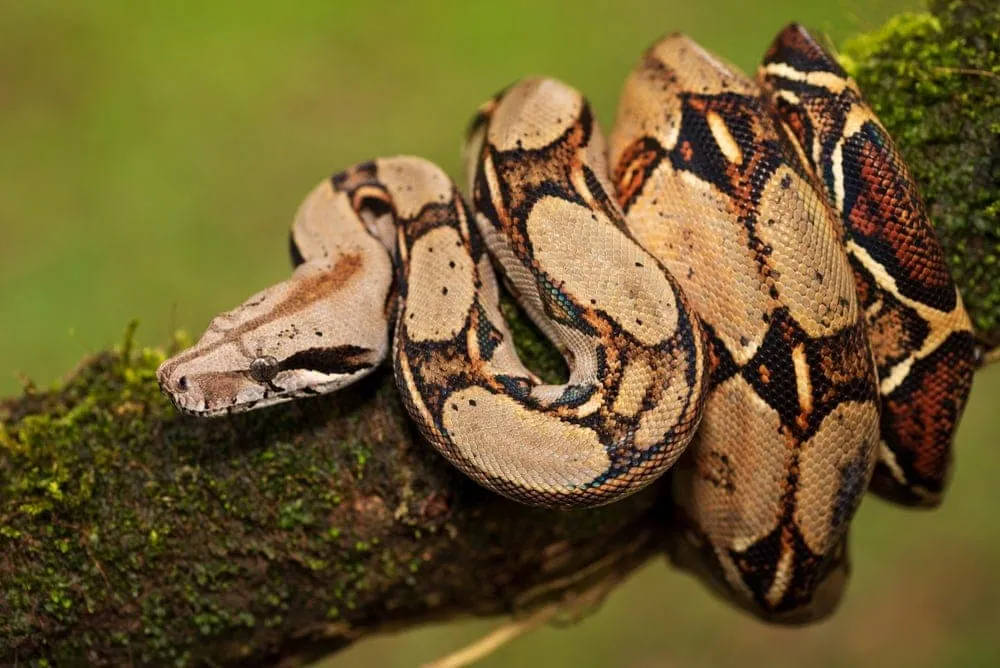
Boa Constrictor
Boa constrictor
A large, powerful snake known for its constricting method of subduing prey, usually reaching lengths of 6 to 10 feet.
Overview
A large, non-venomous snake native to Central and South America, known for its strong constricting ability and docile temperament in captivity.
Native Regions
Central America, South America
Habitats
Rainforests, Savannas
Adult Length
6-10 feet
Adult Weight
50-100 pounds
Lifespan
20–30 years
For Beginners
Possible for dedicated beginners
For Experienced Keepers
Well-suited for experienced keepers
Key Points
- › Large constrictor
- › Non-venomous
- › Popular pet snake
Appearance & Behavior
Large, muscular snake with a thick body, variable coloration, and distinct saddle-like markings
Normal Behavior
Generally docile but may be defensive when young
Social Behavior
Solitary
Warning Signs
Lethargy, wheezing, refusal to eat for extended periods
Key Points
- › Generally calm temperament
- › Grows quite large
Enclosure & Environment
Enclosure Size
6x2x2 feet for adults
Enclosure Type
PVC or wood enclosure with front-opening doors
Substrate
Cypress mulch, coconut fiber, or aspen shavings
Heating
Basking spot of 88-92°F, ambient temperature 75-80°F
Humidity
Maintain 50-70%
Lighting
Optional UVB, but beneficial
Décor & Enrichment
Hides, branches for climbing, water bowl
Cleaning & Maintenance
Spot clean weekly, deep clean monthly
Key Points
- › Requires secure enclosure
- › Needs temperature gradient
Diet & Nutrition
Carnivorous, primarily feeding on rodents
Food Types
Mice, rats, and rabbits (appropriate size)
Feeding Schedule
Juveniles: Weekly; Adults: Every 2-3 weeks
Supplements
Not necessary with a proper diet
Hydration
Fresh water always available
Preparation
Frozen-thawed recommended
Common Mistakes
Feeding prey that is too large
Key Points
- › Feed frozen-thawed rodents
- › Avoid overfeeding
Handling
Docile but strong, requires confident handling
Techniques
Support body fully, move slowly
Do's & Don'ts
Do not grab suddenly or restrain head
Taming
Regular, gentle handling helps maintain docility
Stress Signals
Hissing, coiling defensively, striking
Key Points
- › Handle with confidence
- › Support entire body
Health & Wellness
Common Health Issues
Respiratory infection
Description
Caused by improper temperature and humidity
Symptoms
Wheezing, mucus, open-mouth breathing
Prevention
Maintain proper temperature and ventilation
Treatment
Consult a reptile vet for antibiotics
Mites
Description
Small external parasites
Symptoms
Frequent soaking, rubbing against surfaces
Prevention
Quarantine new reptiles, clean enclosure regularly
Treatment
Use reptile-safe mite treatments
Preventative Care
Monitor health, maintain clean environment
Emergency Signs — seek vet care immediately
Severe weight loss, labored breathing, refusal to eat for months
Key Points
- › Maintain stable temperatures
- › Regular health checks recommended
Breeding
Live-bearing species (ovoviviparous)
Preparation
Provide a large enclosure with suitable hiding spots
Breeding Process
Females give birth to live young after 4-6 months
Egg Care
Not applicable
Hatchling Care
Feed appropriately sized rodents
Key Points
- › Live-bearing species
- › Long gestation period