
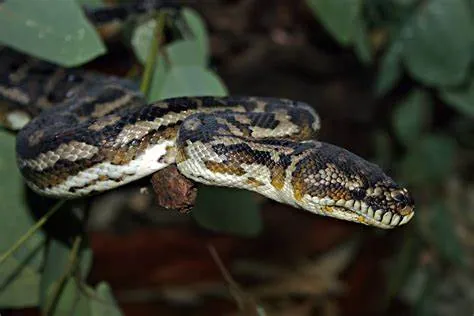
Carpet Python
Morelia spilota
A medium to large snake known for its stunning color patterns and adaptability to various habitats, typically growing to 6 to 10 feet long.
Overview
A medium to large non-venomous snake native to Australia, New Guinea, and surrounding islands, known for its striking patterns and semi-arboreal nature.
Native Regions
Australia, New Guinea
Habitats
Rainforests, Woodlands
Adult Length
6-10 feet
Adult Weight
10-20 pounds
Lifespan
15–20 years
For Beginners
Challenging but possible for dedicated beginners
For Experienced Keepers
Well-suited for experienced keepers
Key Points
- › Striking pattern
- › Semi-arboreal
- › Non-venomous
Appearance & Behavior
Medium to large snake with a slender, muscular body, variable patterns, and colors ranging from yellow to brown and black
Normal Behavior
Active, semi-arboreal, can be defensive as juveniles
Social Behavior
Solitary
Warning Signs
Lethargy, refusal to eat for prolonged periods, excessive hiding
Key Points
- › Can be defensive when young
- › Becomes more docile with handling
Enclosure & Environment
Enclosure Size
4x2x2 feet for adults, larger preferred
Enclosure Type
Wood or PVC enclosure with front-opening doors
Substrate
Cypress mulch, aspen shavings, or coconut fiber
Heating
Basking spot of 88-92°F, cool side around 75-80°F
Humidity
Maintain 50-70%
Lighting
Optional UVB, but beneficial
Décor & Enrichment
Branches, hides, water bowl
Cleaning & Maintenance
Spot clean weekly, deep clean monthly
Key Points
- › Requires climbing structures
- › Needs temperature gradient
Diet & Nutrition
Carnivorous, feeding primarily on rodents
Food Types
Mice and rats (appropriate size)
Feeding Schedule
Juveniles: Weekly; Adults: Every 2-3 weeks
Supplements
Not necessary with a proper diet
Hydration
Fresh water always available
Preparation
Frozen-thawed recommended
Common Mistakes
Overfeeding or feeding prey too large
Key Points
- › Feed frozen-thawed rodents
- › Avoid overfeeding
Handling
Can be handled but may be defensive as a juvenile
Techniques
Support body, move slowly
Do's & Don'ts
Do not grab suddenly or restrain head
Taming
Regular, gentle handling helps them become docile
Stress Signals
Striking, hissing, hiding excessively
Key Points
- › Can be defensive when young
- › Handle with confidence
Health & Wellness
Common Health Issues
Respiratory infection
Description
Caused by low temperatures or high humidity
Symptoms
Wheezing, mucus, open-mouth breathing
Prevention
Maintain proper temperature and ventilation
Treatment
Consult a reptile vet for antibiotics
Obesity
Description
Overfeeding or infrequent exercise
Symptoms
Excess body fat, sluggishness
Prevention
Feed appropriate portions, allow climbing
Treatment
Adjust feeding schedule and encourage movement
Preventative Care
Monitor weight, keep temperatures stable
Emergency Signs — seek vet care immediately
Lethargy, refusal to eat for months, labored breathing
Key Points
- › Avoid overfeeding
- › Maintain proper temperatures
Breeding
Oviparous, lays eggs in a nest
Preparation
Provide nesting box with moist substrate
Breeding Process
Females lay eggs and may coil around them for incubation
Egg Care
Incubate at 86-89°F with 90-100% humidity
Hatchling Care
Feed appropriately sized rodents
Key Points
- › Egg-laying species
- › Requires incubation