
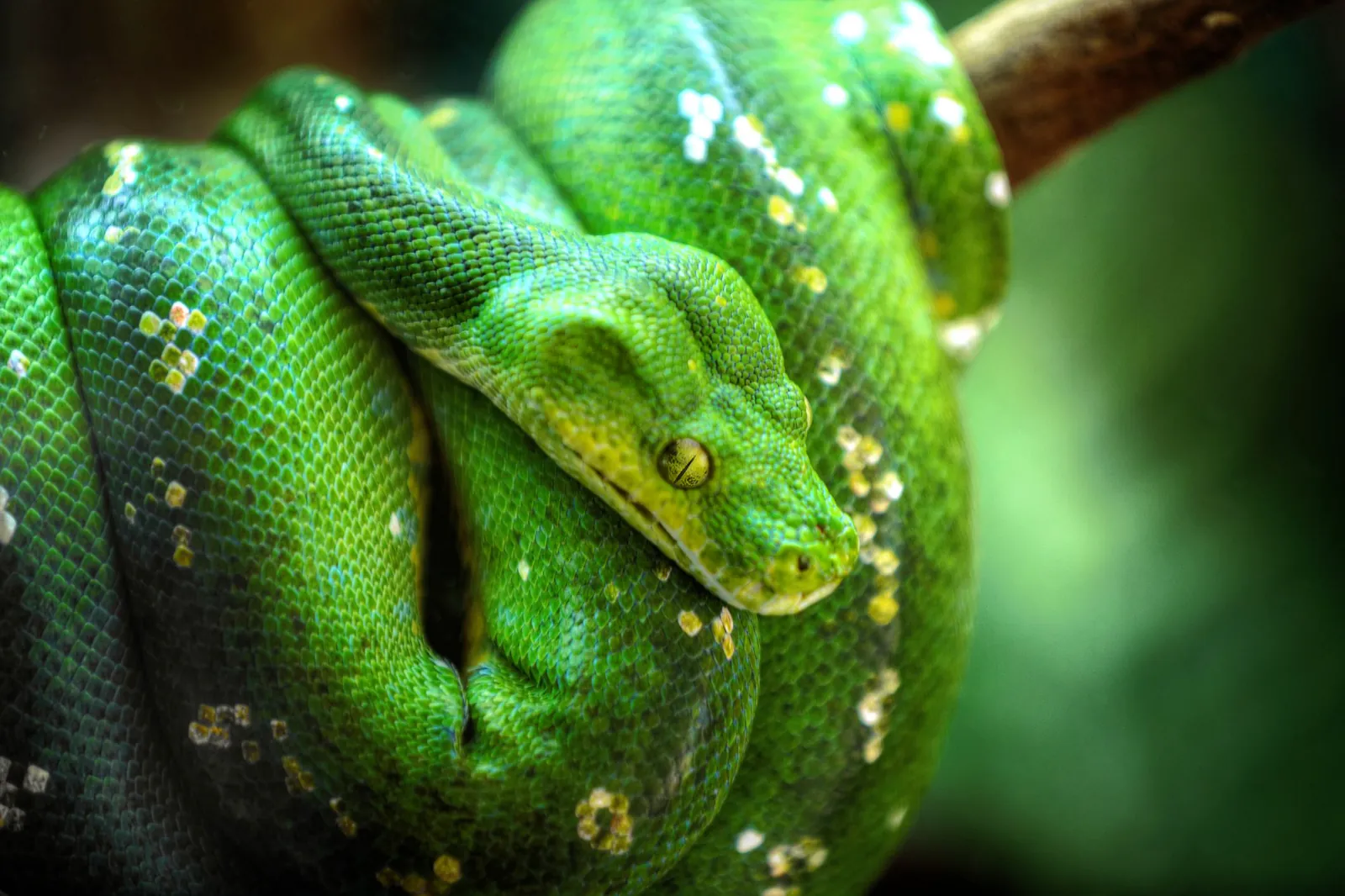
Green Tree Python
Morelia viridis
A strikingly beautiful snake that spends most of its life in trees, known for its vibrant green color and unique coiling behavior.
Overview
A striking arboreal snake native to New Guinea and northern Australia, known for its bright green coloration and unique coiled resting posture.
Native Regions
New Guinea, Australia
Habitats
Rainforests
Adult Length
5-6 feet
Adult Weight
3-5 pounds
Lifespan
15–20 years
For Beginners
Not recommended
For Experienced Keepers
Suitable for experienced keepers
Key Points
- › Arboreal species
- › Bright green coloration
- › Not for beginners
Appearance & Behavior
Slender body, prehensile tail, bright green with blue or yellow markings
Normal Behavior
Nocturnal, spends most of its time coiled on branches
Social Behavior
Solitary
Warning Signs
Hanging with mouth open, excessive hiding, refusal to perch
Key Points
- › Arboreal species
- › Requires proper perching setup
Enclosure & Environment
Enclosure Size
24x24x36 inches for adults
Enclosure Type
Glass or PVC enclosure
Substrate
Coconut fiber, cypress mulch, or paper towels
Heating
Basking spot of 86-88°F, ambient temperature 78-82°F
Humidity
Maintain 50-70%, increase during shedding
Lighting
UVB optional but beneficial
Décor & Enrichment
Sturdy branches, plants for cover
Cleaning & Maintenance
Spot clean weekly, deep clean monthly
Key Points
- › Requires high humidity
- › Needs horizontal perches
Diet & Nutrition
Carnivorous, feeding primarily on rodents
Food Types
Mice and rats of appropriate size
Feeding Schedule
Juveniles: Every 5-7 days; Adults: Every 10-14 days
Supplements
Not necessary with a proper diet
Hydration
Fresh water should always be available
Preparation
Frozen-thawed recommended
Common Mistakes
Feeding prey that is too large
Key Points
- › Feed frozen-thawed prey
- › Monitor feeding response
Handling
Should not be handled frequently due to defensive nature
Techniques
Use a hook to gently guide the snake before handling
Do's & Don'ts
Do not grab from above, avoid handling after feeding
Taming
Minimal handling recommended
Stress Signals
Striking, staying coiled tightly, hissing
Key Points
- › Best as a display animal
- › Use a hook for handling
Health & Wellness
Common Health Issues
Respiratory infection
Description
Caused by improper humidity or temperature
Symptoms
Open-mouth breathing, wheezing
Prevention
Maintain correct environmental conditions
Treatment
Consult a vet for antibiotics
Mouth rot
Description
Bacterial infection of the mouth
Symptoms
Swelling, pus, difficulty eating
Prevention
Keep enclosure clean and stress levels low
Treatment
Vet treatment required
Preventative Care
Regular enclosure maintenance, proper diet
Emergency Signs — seek vet care immediately
Severe weight loss, labored breathing, refusal to eat for extended periods
Key Points
- › Humidity and temperature must be controlled
- › Minimal handling recommended
Breeding
Egg-laying species (oviparous)
Preparation
Provide a secure nesting box with humid substrate
Breeding Process
Females lay 10-25 eggs and coil around them for incubation
Egg Care
Incubate at 86-88°F with 90-100% humidity
Hatchling Care
Feed pinky mice after first shed
Key Points
- › Requires precise incubation conditions
- › Maternal incubation possible