
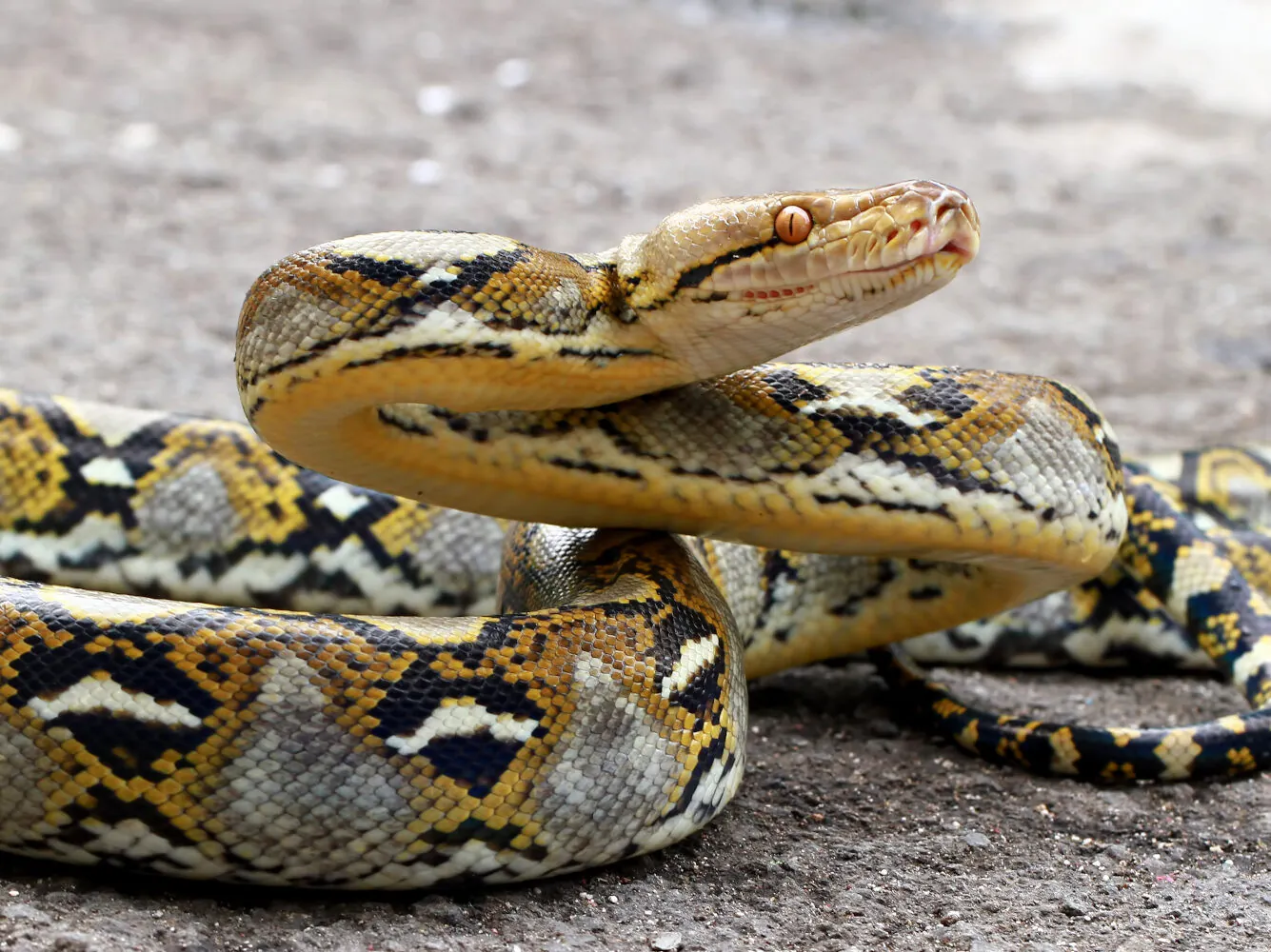
Reticulated Python
Malayopython reticulatus
One of the longest snake species in the world, known for its intricate patterns and impressive size, often exceeding 20 feet.
Overview
One of the longest snake species in the world, the reticulated python is a powerful constrictor native to Southeast Asia, known for its striking pattern and intelligence.
Native Regions
Southeast Asia
Habitats
Rainforests, Grasslands
Adult Length
10-20 feet
Adult Weight
100-300 pounds
Lifespan
20–30 years
For Beginners
Not recommended
For Experienced Keepers
Suitable for experienced keepers
Key Points
- › Large constrictor
- › Complex pattern
- › Not for beginners
Appearance & Behavior
Extremely long and muscular snake with an intricate net-like pattern
Normal Behavior
Active, intelligent, and curious
Social Behavior
Solitary
Warning Signs
Lethargy, wheezing, refusal to eat for extended periods
Key Points
- › Highly intelligent
- › Requires careful handling
Enclosure & Environment
Enclosure Size
8x4x4 feet minimum for adults
Enclosure Type
Custom-built PVC or wood enclosure
Substrate
Cypress mulch, coconut fiber, or aspen shavings
Heating
Basking spot of 88-92°F, ambient temperature 75-80°F
Humidity
Maintain 50-70%
Lighting
Optional UVB, but beneficial
Décor & Enrichment
Hides, branches for climbing, large water bowl
Cleaning & Maintenance
Spot clean weekly, deep clean monthly
Key Points
- › Requires extremely large enclosure
- › Needs strong locks
Diet & Nutrition
Carnivorous, primarily feeding on large prey items
Food Types
Rats, rabbits, guinea pigs, poultry (appropriate size)
Feeding Schedule
Juveniles: Weekly; Adults: Every 2-4 weeks
Supplements
Not necessary with a proper diet
Hydration
Fresh water always available
Preparation
Frozen-thawed recommended
Common Mistakes
Feeding prey that is too large or too frequently
Key Points
- › Feed frozen-thawed prey
- › Monitor feeding response
Handling
Strong and powerful, must be handled with confidence
Techniques
Support the entire body, avoid sudden movements
Do's & Don'ts
Do not handle alone if large, do not restrain head
Taming
Regular handling from a young age helps maintain docility
Stress Signals
Hissing, coiling defensively, striking
Key Points
- › Handle with caution
- › Requires confident handling
Health & Wellness
Common Health Issues
Respiratory infection
Description
Caused by improper temperature and humidity
Symptoms
Wheezing, mucus, open-mouth breathing
Prevention
Maintain proper temperature and ventilation
Treatment
Consult a reptile vet for antibiotics
Obesity
Description
Overfeeding or lack of exercise
Symptoms
Excessive body fat, lethargy
Prevention
Feed appropriate portions, provide climbing space
Treatment
Adjust diet and encourage movement
Preventative Care
Monitor health, maintain clean environment
Emergency Signs — seek vet care immediately
Severe weight loss, labored breathing, refusal to eat for months
Key Points
- › Requires strict feeding schedule
- › Regular health monitoring is essential
Breeding
Egg-laying species (oviparous)
Preparation
Provide a large nesting box with humid substrate
Breeding Process
Females lay 20-80 eggs and coil around them for incubation
Egg Care
Incubate at 88-90°F with 90-100% humidity
Hatchling Care
Feed appropriately sized rodents after first shed
Key Points
- › Large clutch size
- › Maternal incubation possible