
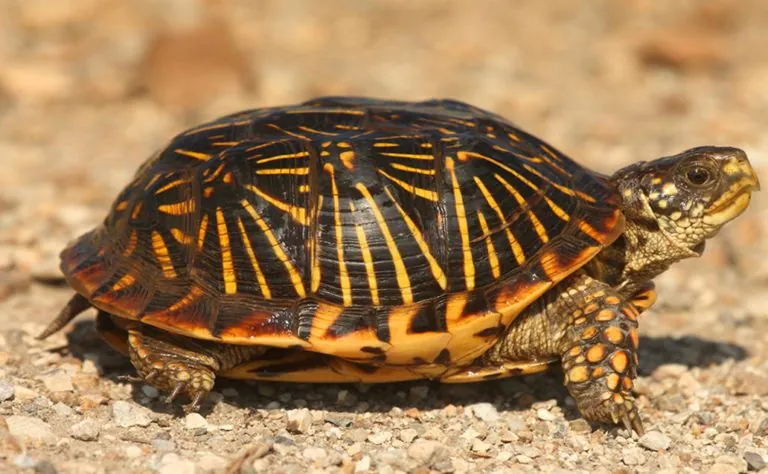
Western Box Turtle
Terrapene ornata
A small terrestrial prairie box turtle with a dark, high-domed shell marked by radiating yellow to orange lines, adapted to grasslands and able to close its hinged plastron tightly when threatened.
Overview
The western box turtle (Terrapene ornata), also called the ornate or plains box turtle, is a terrestrial emydid of North American prairies and grasslands, ranging across the Great Plains into the southwestern United States and northern Mexico. Adults are usually about 4-6 inches in carapace length with a dark shell patterned in radiating yellow to orange lines, and a hinged plastron that can close tightly for defense. They are long-lived, primarily diurnal burrowers that need large floor space, UVB, a warm basking site, diggable substrate, and a varied omnivorous diet. Wild collection harms declining populations; captive-bred animals are strongly preferred when keeping this species is legal locally.
Native Regions
Central and midwestern United States (Great Plains), Southwestern United States, Northern Mexico (Chihuahua and Sonora)
Habitats
Prairies and grasslands, Sandhills and sandy plains, Desert grasslands, Open pastures and shrub-grass mosaics
Adult Length
Typically about 4-6 inches carapace length; occasional large adults near about 6-6.7 inches
Adult Weight
Usually about 200-550 grams (about 7-19 ounces)
Lifespan
30–50 years
For Beginners
Not a beginner species. Adults need roughly a 4x2 ft or larger footprint (larger preferred), measured UVB and heat, humidity microclimates with a moist hide, and decades of care. Wild-caught adults often fail in captivity. Choose another species unless you can meet space, lighting, and long-term commitment.
For Experienced Keepers
Rewarding for experienced keepers who can provide outdoor pens where climate allows, or large indoor enclosures with deep substrate, seasonal photoperiod, and careful diet variety. Breeding and brumation are advanced topics requiring veterinary clearance and controlled protocols.
Key Points
- › Prairie and grassland terrestrial box turtle (Terrapene ornata)
- › Needs large floor space, UVB, heat gradient, and deep diggable substrate
- › Long-lived omnivore best kept singly by experienced keepers
Appearance & Behavior
Adults typically measure about 4-6 inches (10-15 cm) in straight carapace length, with occasional larger individuals. Weight commonly falls around 200-550 grams. The carapace is high-domed, usually dark brown to black with yellow to orange radiating lines on the scutes and often a middorsal stripe. Males often show a red iris, a slightly concave rear plastron, a thicker tail, and a strongly curved inner hind toenail; females are often slightly larger with browner eyes and a flatter plastron.
Normal Behavior
Diurnal and largely terrestrial. Peak activity is often morning and late afternoon, with reduced midday activity in heat and increased activity after rain. Much of the day may be spent in shallow forms or burrows. They bask to raise body temperature, then retreat to shade or moist refuges. They are not aquatic turtles, though they use shallow water for drinking and soaking.
Social Behavior
Social interactions are minimal outside mating. Home ranges may overlap in the wild, but solitary housing is the safest captive default. Males can be aggressive toward each other. Group housing needs much more space, duplicated resources, and close monitoring for bullying or breeding stress.
Warning Signs
Persistent lethargy, appetite loss, swollen or closed eyes, nasal or ocular discharge, open-mouth breathing, soft or pitted shell, foul shell odor, lopsided swimming or soaking that never ends, sudden weight loss, or inability to right themselves are warning signs that warrant prompt exotic veterinary evaluation.
Key Points
- › Radiating yellow-orange shell pattern on a dark, hinged box shell
- › Diurnal burrower; active after rain and cooler parts of the day
- › Best kept alone; cohousing is not required and adds risk
Enclosure & Environment
Enclosure Size
Modern indoor starting point for one adult is about 48x24x24 inches (4x2x2 ft) of floor space; about 5x2.5 ft or larger is better. Outdoor pens should be at least several feet on a side with buried walls to prevent escape. Height must allow safe UVB and heat fixture distances.
Enclosure Type
Secure outdoor prairie-style pen when climate permits; otherwise a large PVC, sealed wood, or purpose-built indoor enclosure with strong ventilation and opaque visual barriers along lower walls to reduce pacing.
Substrate
Provide deep, diggable, well-drained mix such as organic topsoil with play sand (for example about 60/40), or similar soil-based blends. Aim for several inches indoors and deeper outdoors so turtles can form burrows. Avoid loose dry sand alone, cedar, and dusty substrates.
Heating
Create a basking surface of about 90-95°F (32-35°C) with a cool zone around 70-77°F (21-25°C). Ambient non-basking areas commonly fall near 70-80°F. Allow a nighttime drop roughly into the 60s°F when housing permits; do not leave the whole enclosure at basking temperature. Measure with probe and infrared thermometers on the actual surfaces turtles use.
Humidity
Adult ambient humidity is often about 30-60%, drier than woodland box turtles, but a moist hide or humid burrow must always be available. Hatchlings need higher humidity (often around 60-70%). Mist substrate in the morning as needed; avoid stagnant, constantly wet conditions without ventilation.
Lighting
Provide bright daytime lighting and UVB overlapping the basking zone for about 10-14 hours depending on season. Target roughly UVI 3-4 at the shell in the basking area with a quality T5 HO forest/5.0-class lamp at a measured distance. Replace UVB bulbs on schedule. Outdoor unfiltered sun can replace artificial UVB when shade is always available.
Décor & Enrichment
Offer at least two hides or burrow sites, a humid cool-end retreat, hollow logs, leaf litter or grasses, flat stones, edible drought-tolerant plants, and a large shallow water dish no deeper than about knee height so the turtle can enter and exit easily.
Cleaning & Maintenance
Spot-clean feces and soiled substrate daily. Refresh the water dish daily and scrub it regularly. Replace contaminated substrate as needed and deep-clean or fully refresh indoor substrate every few months depending on bioload and humidity.
Key Points
- › Minimum about 4x2 ft floor space indoors; larger or outdoor preferred
- › Bask near 90-95°F with a cool retreat near 70-77°F and UVB
- › Deep diggable soil plus a humid hide even in drier ambient air
Diet & Nutrition
Western box turtles are omnivores. Wild diets are often insect-heavy, especially in juveniles, with plant matter and fruit taken when available. Captive adults do well on roughly half animal matter and half plant matter with strong variety; growing turtles usually need a higher animal-protein share.
Food Types
Staples include gut-loaded insects, earthworms, captive-bred snails, dark leafy greens, and vegetables. Limited fruit and occasional commercial complete diets add variety. Avoid wild-caught insects from pesticide areas, iceberg lettuce as a staple, and overfeeding fatty larvae or fruit.
Feeding Schedule
Feed juveniles daily. Feed adults about every other day and adjust portions to keep a healthy body condition without obesity.
Supplements
Dust insects with phosphorus-free calcium for juveniles often, and less often for adults with correct UVB. Use a multivitamin that includes preformed vitamin A on a limited schedule. Provide cuttlebone free-choice. Do not stack multiple D3-heavy products without guidance.
Hydration
Provide clean shallow soaking and drinking water at all times. Many keepers also offer brief supervised soaks. Maintain a humid retreat so turtles can rehydrate without living in a constantly wet enclosure.
Preparation
Offer food on a flat dish or tray to reduce substrate ingestion. Gut-load feeder insects. Chop produce into manageable pieces. Remove uneaten perishable food the same day.
Common Mistakes
Relying only on fruit or pellets, skipping UVB while expecting diet alone to prevent metabolic bone disease, keeping ambient air dry without a moist hide, housing in a tiny tank, and collecting wild turtles that often decline in captivity.
Key Points
- › Omnivore with substantial insect and invertebrate intake
- › Juveniles daily; adults about every other day with high variety
- › Calcium, limited multivitamin, cuttlebone, and clean shallow water
Handling
Western box turtles can be carefully handled when needed, but they generally prefer to be left alone. They are observation pets more than frequent handling pets. Always wash hands before and after contact because reptiles can carry Salmonella.
Techniques
Scoop from below rather than grabbing from above. Support the shell with both hands so the body and legs are secure. Keep the turtle low over a soft surface; falls can cause severe injury.
Do's & Don'ts
Do not flip the turtle onto its back, dangle it by the shell, or force the limbs out of the shell. Avoid handling during feeding, illness, or right after acquisition while the animal is settling. Never collect wild turtles for pets where prohibited, and do not release captives into the wild.
Taming
Trust builds slowly through predictable husbandry and optional gentle shell touches or tong feeding. Do not expect dog-like tameness; many individuals remain shy for life.
Stress Signals
Full shell closure, hissing, frantic escape attempts, voiding, or repeated withdrawal after brief handling are cues to return the turtle and reduce interaction.
Key Points
- › Handleable for short necessary handling, not frequent cuddling
- › Support the shell securely; never drop or invert the turtle
- › Prefer interaction via feeding and enclosure enrichment
Health & Wellness
Common Health Issues
Respiratory infection
Description
Often linked to chronic chill, poor ventilation, or inappropriate humidity without a usable thermal gradient.
Symptoms
Nasal bubbles or discharge, wheezing, open-mouth breathing, lethargy, and appetite loss.
Prevention
Maintain correct day and night temperatures, provide a usable cool-to-warm gradient, avoid stagnant wet air, and quarantine new animals.
Treatment
Contact a qualified exotic veterinarian promptly; antibiotics or other therapy must be prescribed for the individual. This content is not a diagnosis.
Shell rot and shell injury
Description
Bacterial or fungal shell disease and traumatic damage can follow filthy, constantly wet conditions, bites, or falls.
Symptoms
Soft spots, pits, discoloration, foul odor, bleeding, or exposed bone.
Prevention
Keep the enclosure clean, provide dry basking opportunity, avoid chronically soggy substrate without retreats, and prevent falls or fighting.
Treatment
Seek exotic veterinary care for cleaning, diagnostics, and treatment; do not rely on home remedies alone.
Vitamin A deficiency and eye problems
Description
Inadequate diet variety can contribute to hypovitaminosis A and related eye or respiratory issues.
Symptoms
Swollen or closed eyes, discharge, lethargy, and poor appetite.
Prevention
Feed a varied omnivorous diet including animal prey and leafy greens; use a multivitamin with preformed vitamin A on a limited schedule.
Treatment
Veterinary assessment is required; vitamin therapy should not be improvised at high doses.
Metabolic bone disease
Description
Calcium/phosphorus imbalance and inadequate UVB can weaken bone and shell, especially in growing turtles.
Symptoms
Soft shell, deformed shell growth, weakness, tremors, or fractures.
Prevention
Provide measured UVB, calcium supplementation, and a balanced diet; avoid permanent glass/plastic filtering of UVB lamps.
Treatment
Urgent exotic veterinary care; supportive husbandry changes alone are not a substitute for diagnosis.
Preventative Care
Annual or twice-yearly exams with a reptile-experienced veterinarian, fecal checks as advised, weight tracking, quarantine of new turtles, and husbandry audits of temperature, humidity, UVB age, and diet. Prefer captive-bred animals and never release pets into the wild.
Emergency Signs — seek vet care immediately
Open-mouth breathing, severe lethargy, collapse, prolonged anorexia, blood from mouth or cloaca, shell fractures with bleeding, inability to retract or right, or sudden neurological signs require emergency exotic veterinary care.
Key Points
- › Most problems track husbandry failures or wild-caught stress
- › Watch eyes, breathing, shell quality, appetite, and weight
- › Use an exotic veterinarian; do not treat emergencies at home
Breeding
Breeding is seasonal and advanced. Mating can occur from spring through early fall, with nesting usually from mid-May through mid-July. Not every female nests every year, and second clutches are uncommon.
Preparation
Only breed healthy, mature animals with veterinary clearance. Provide deep soft nesting substrate, secure housing, and enough space to separate aggressive males. Understand local laws: Terrapene species are CITES Appendix II listed and many U.S. states protect wild populations.
Breeding Process
Males typically mature around 8-9 years and females around 10-11 years, with some geographic variation. Females dig shallow nests in soft soil and usually lay one clutch of about 1-8 eggs (often averaging closer to 2-4). Parental care ends after nesting.
Egg Care
Incubate at controlled temperature and moisture; natural incubation often lasts about two to three months, and captive incubation commonly falls near 55-90 days depending on conditions. Temperature can influence hatchling sex in many turtles; use published Terrapene protocols rather than guessing.
Hatchling Care
Hatchlings need higher humidity, shallow water, UVB, and frequent invertebrate-rich meals in secure housing. Protect them from drowning, drying out, and adult turtles. Wild hatchlings often overwinter in the nest; captive neonates still need careful first-year husbandry.
Key Points
- › Late maturity; nesting mainly late spring to early summer
- › Clutches usually small (often about 2-4 eggs, range 1-8)
- › Incubation and neonate care are specialist tasks